Alopecia X in Pomeranians: What It Is, How to Spot It, and Why It’s Becoming More Common?
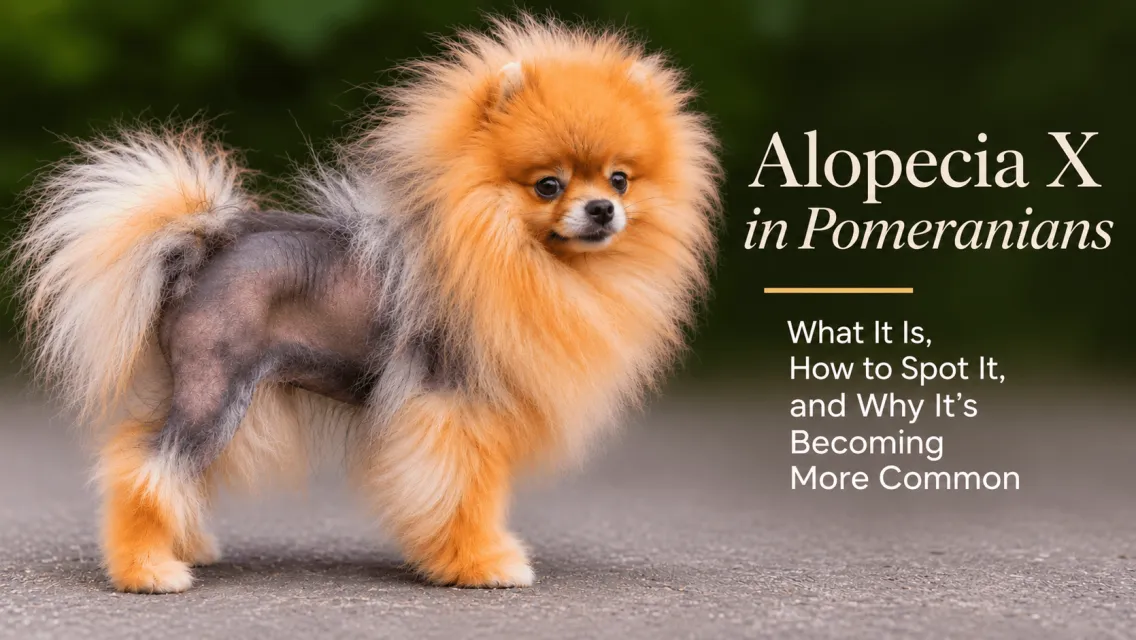
Alopecia X is a non-painful, non-itchy hair loss condition that most often affects Pomeranians, and more owners are meeting it than ever before. It is often called “black skin disease” because the bare skin darkens over time. The good news: it is mainly a cosmetic problem and does not shorten a dog’s life. The hard part: its cause is still unknown, and hair regrowth is never guaranteed.
What is Alopecia X?
Alopecia X is a hair cycle disorder: the hair follicles stop moving into the growth phase, so shed hair is not replaced. It was first described in 1977, and the “X” stands for its unknown cause. Over the years it has carried many names, which reflects how unclear the cause has been:
- Black skin disease or “coat funk”
- Hair cycle arrest
- Castration-responsive or growth hormone-responsive alopecia
- Adrenal sex hormone alopecia, pseudo-Cushing’s syndrome
It is most common in plush, double-coated breeds: Pomeranian, Keeshond, Chow Chow, Samoyed, Alaskan Malamute, Siberian Husky, American Eskimo Dog and Miniature Poodle. Among these, the Pomeranian is the breed affected most often.
Old theories blamed a lack of growth hormone, but later studies found normal hormone levels in many affected dogs. A gene-expression study of Pomeranian skin found that growth-promoting pathways (Wnt and Shh) were switched down, while genes that break down melatonin were switched up. Researchers now see it as a hereditary condition linked to how the skin itself handles hormones, not a simple hormone deficiency.
How to recognize it
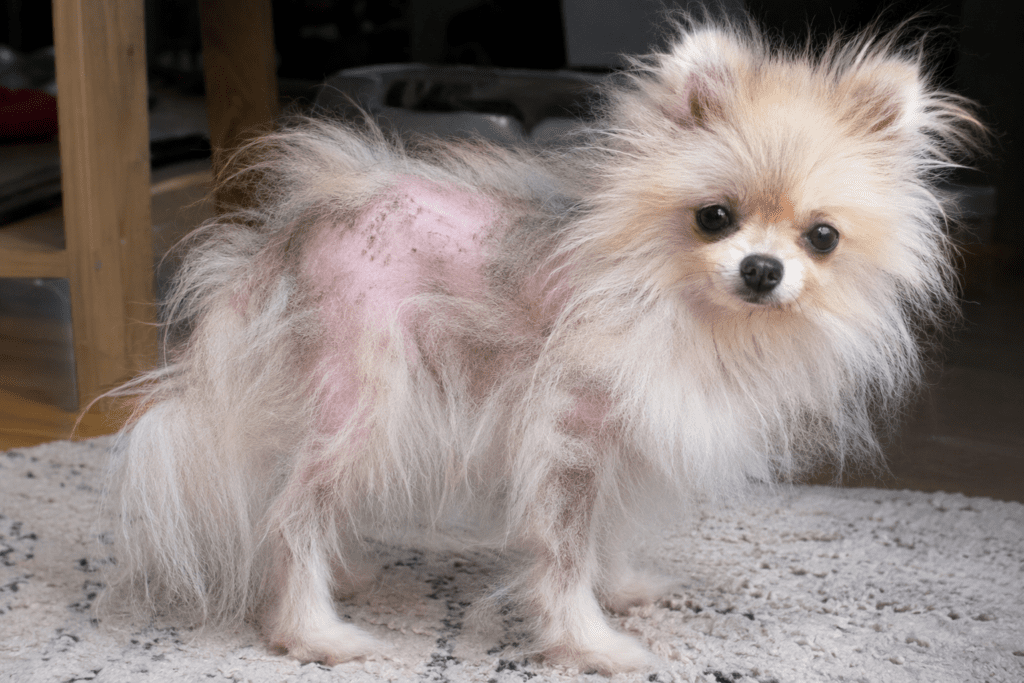
The first signs usually appear in young adulthood, often between 1 and 4 years of age, in a dog that is otherwise healthy and happy. Watch for this typical progression:
- Coat texture changes. The long, harsh guard hairs fall out first. The coat that remains looks dull, dry, cottony or “puppy-like”, and may fade or change colour.
- Thinning in friction areas. Hair thins first on the back of the thighs, around the collar and on the flanks.
- Spreading, symmetrical hair loss. Bald patches appear on both sides of the body equally and spread over the trunk, neck, tail and upper legs.
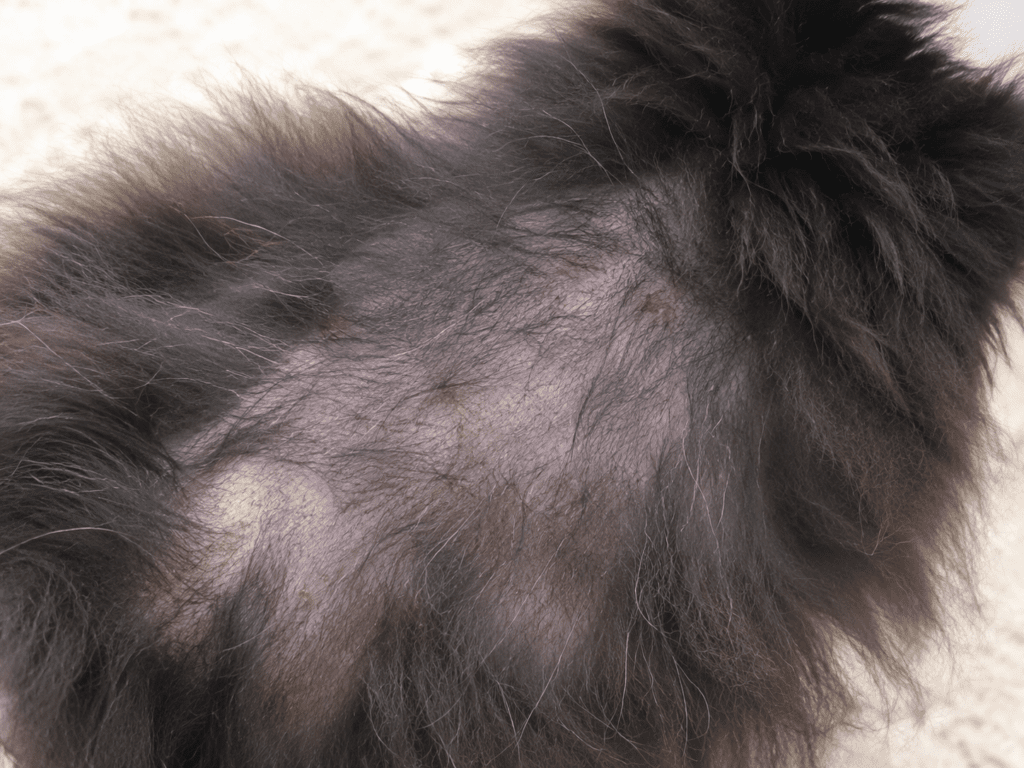
- Darkening skin. Exposed skin turns grey to black (hyperpigmentation). It may also become dry or scaly.
Two things are typical of Alopecia X and help tell it apart from other problems:
- The head and lower legs keep their hair. A Pomeranian with a full face and “socks” but a bare body is a classic picture.
- The dog does not itch and feels well. Scratching, redness, sores, weight gain, lethargy, heavy drinking or a pot belly point to another disease and need a vet visit soon.
Alopecia X is not contagious, so it cannot spread to other dogs or people.
How a vet confirms it
There is no single test for Alopecia X. It is a diagnosis of exclusion: the vet rules out every other cause of symmetrical hair loss first. Several of those conditions are serious and treatable, so this step matters.
| What is ruled out | How |
|---|---|
| Hypothyroidism | Thyroid hormone blood tests |
| Cushing’s disease (hypercortisolism) | Adrenal function tests |
| Bacterial or yeast skin infection | Skin cytology |
| Mange mites | Skin scrapings |
| Other skin diseases (e.g. sebaceous adenitis) | Skin biopsy |
Basic bloodwork and a urine test check general health. A biopsy supports the diagnosis but cannot confirm it alone. Sex hormone panels are expensive and hard to read, because healthy dogs can show abnormal results too.
Why are more Pomeranians affected?
No study has yet measured how fast cases are rising, but breeders and vets agree they see more of it. The research so far points to a mix of genetics and the way the breed has been shaped:
- It runs in families. Strong family clustering and breed predisposition show a hereditary basis. A single “alopecia gene” has not been found, which suggests several genes are involved.
- The fashion for woolly, teddy-bear coats. A 2025 Dutch-Belgian study of 211 Pomeranians found that dogs with a woolly coat had a higher risk than dogs with a correct, shiny double coat. Breeding for ever softer, fluffier, “cotton” coats may be selecting for the same follicle problem.
- Smaller and smaller dogs. US researchers suspect that genes for very small body size and androgen (male hormone) activity play a role. The demand for “teacup” Pomeranians pushes size down.
- Males are at higher risk. The same 2025 study found males more affected than females, and intact males are reported most often.
- Popularity and mass breeding. High demand leads to breeding from few popular lines, often without health history checks. This narrows the gene pool and spreads hidden risk genes faster.
- More awareness. Social media and owner communities mean cases that once went unnamed are now recognised and reported.
The good news is that research is moving. A 2025–2028 project at the University of Georgia is sequencing the genomes of 200 affected and healthy Pomeranians, aiming to build a genetic risk test for breeders.
Treatment options
Treatment can bring the coat back in many dogs, but results vary and hair loss can return years later. Because the condition is mostly cosmetic, every option should be weighed against its risks with your vet.
| Option | What to expect |
|---|---|
| Neutering / spaying | Usually the first step; many intact dogs regrow hair, though it may recur |
| Melatonin | Regrowth in roughly 40–60% of dogs; cheap and generally safe (use xylitol-free products) |
| Deslorelin implant | Lowers sex hormones; may help intact males |
| Microneedling | Stimulates follicles; needs anaesthesia and pain control |
| Trilostane or mitotane | Can work, but has serious side effects and needs close monitoring |
| Medroxyprogesterone injections | May help; risks include mammary tumours and diabetes |
Good daily care supports the skin whatever you choose: a balanced diet, gentle coat products, and protection from sun and cold for bare skin. Some owners choose not to treat at all, which is a valid choice for a dog that feels well.
What owners and breeders can do
The best protection is responsible breeding, since the condition is inherited.
- Buy from breeders who track health. Ask whether parents, grandparents and siblings developed coat loss, and at what age.
- Value a correct coat over extreme fluff. A proper Pomeranian coat has a harsh, shiny outer coat over a dense undercoat, not a cottony one.
- Avoid extreme miniaturisation. “Teacup” size is not a breed standard and may add to the risk.
- Remove affected dogs from breeding, and share information openly within the breed community.
- See a vet early if the coat changes, so serious diseases are ruled out quickly.
Alopecia X can be upsetting to watch, but a Pomeranian with a bare body is still the same happy, healthy companion. Knowing the signs early, and breeding with care, is how we keep this beautiful breed in full coat.


