Winter and Dogs: How to Care for Your Dog When Temperature Drops

Winter and Dogs: How to Care for Your Dog When Temperature Drops
Winter Isn’t Just About the Cold Outside
In winter, dogs face hazards that simply don’t exist in summer: cold, road salt on sidewalks, ice, dry indoor air. The same principle that applies to nutrition or skin health applies here too — the body tries to adapt on its own first, and outward signs (shivering, lifted paws, dry skin) show up only once it can no longer cope alone. Knowing what to watch for and how to prevent problems in advance can spare your dog anything from simple irritation to frostbite.
First Signs That a Dog Is Cold
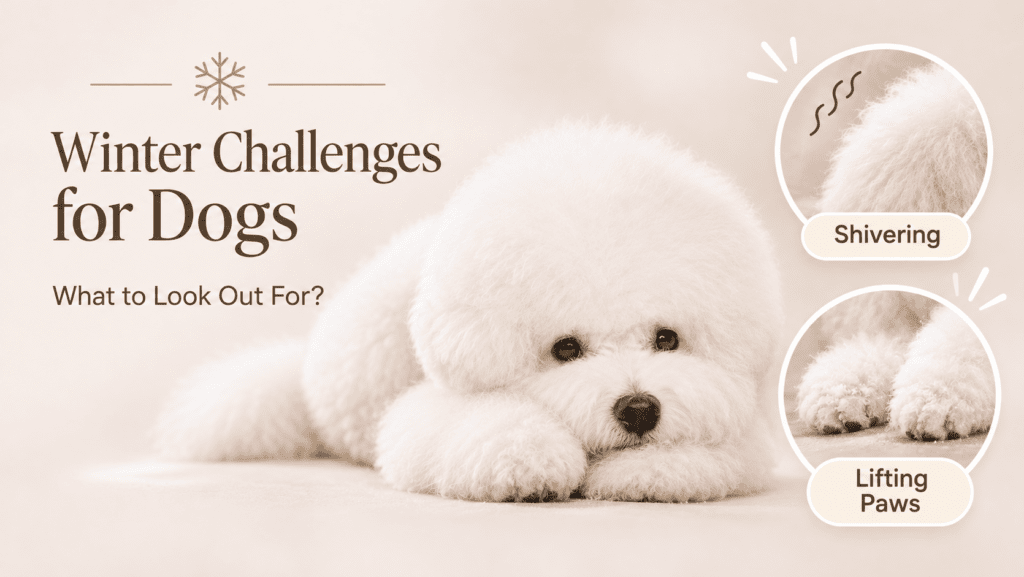
Dogs rarely show discomfort obviously — most signs are subtle and easy to miss if you don’t know what to look for:
- Shivering – the most obvious sign, but it already means the body is actively working to generate heat.
- Lifting or holding a paw off the ground – the dog pauses and raises one paw because the cold or salted surface is already starting to burn or hurt the pad.
- Refusing to go further, or pulling toward home on the leash – the dog is trying to shorten the walk itself.
- Curling into a ball, tail tucked against the body – a way to reduce heat loss through unprotected areas.
- Lethargy, low energy, or no interest in playing – energy is being redirected to maintaining body temperature.
- Whining or whimpering – especially common in small or thin-coated dogs.
- Cold ears, tail tip, or paws to the touch – a sign that circulation is already being redirected to protect the body’s core.
If you notice several of these signs at once, the best move is to shorten the walk and head back indoors — not wait for the dog to “warm up to it.”
Protecting Paws from Salt and Ice
Road and sidewalk salt (chlorides) is one of the most common yet most underrated winter hazards for dogs. It irritates paw-pad skin, causes cracking, and can even cause chemical burns if a dog walks on salted surfaces for too long. Ice between the toes and the sheer dryness caused by low temperatures add to the problem. There’s an extra risk too: dogs later lick their paws and swallow residual salt or chemicals.
Two proven ways to protect against this:
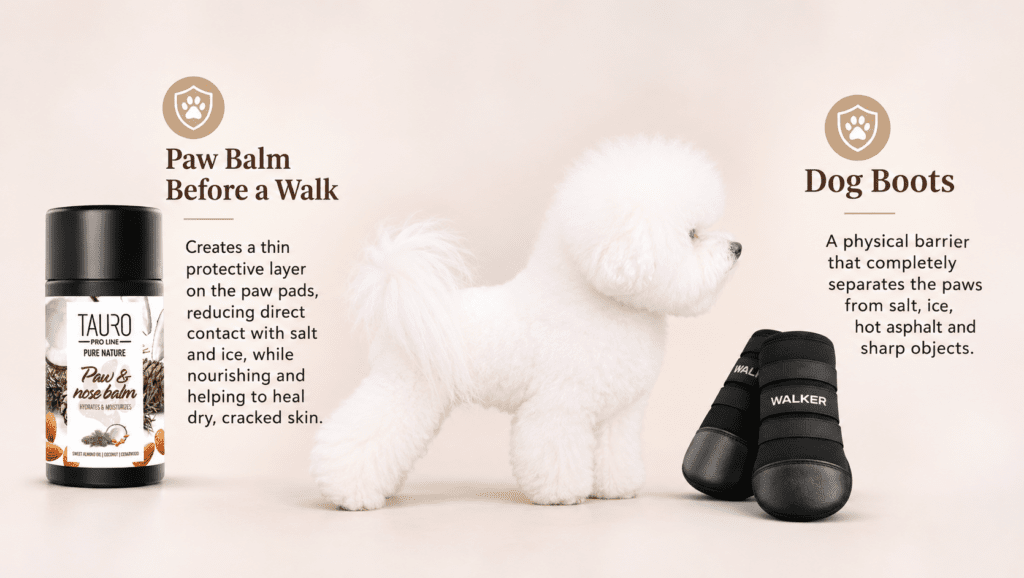
- A protective balm before heading out – creates a thin protective layer on the pad that reduces direct contact with salt and ice. For example, the Tauro Pro Line repairing and protecting paw balm for dogs and cats is designed specifically to treat and protect cracked, dry skin year-round, and especially in winter. (source: kika.lt)
- Boots – a physical barrier that fully separates the paw from salt, hot asphalt, or sharp objects. For example, Trixie Walker neoprene dog boots are marketed specifically as protection against winter salt, ice, and mud. (source: kika.lt)
Important: after every walk, always wash or wipe the paws with warm water, even if you used a balm or boots — salt residue can still linger between the toes, and the dog will lick it off.
Does a Dog Need a Coat in Winter?
The answer depends on the individual dog’s body, not fashion. A few factors are worth weighing before deciding:
- Coat type – double-coated breeds (such as Spitz-type dogs with a dense undercoat) naturally insulate against cold far better than dogs with a single-layer, silky coat — for the latter, a coat or sweater is often necessary even for a short trip outside.
- Body size – small dogs lose heat faster because their surface-area-to-volume ratio is higher — so smaller and lower-to-the-ground dogs tend to feel the cold sooner.
- Age – puppies and older dogs regulate body temperature less efficiently than a healthy adult dog.
- Health condition – arthritis, heart disease, or endocrine disorders can reduce heat production or tolerance to cold.
- Recently clipped or bathed coat – temporarily reduces natural insulation, even in a naturally thick-coated breed.
Practical rule of thumb: if a dog shivers, resists walking, or lifts its paws right after stepping outside, a coat or sweater isn’t a luxury — it’s a necessity. Conversely, for thick-coated breeds well adapted to cold, dressing them is usually unnecessary and can even interfere with natural thermoregulation.
When and How to Prepare for Winter Walks
Before heading out:
- Apply a protective balm to the paws or put on boots, especially if there’s salt or ice outside.
- Choose shorter, more frequent walks in extremely cold weather — several short walks beat one long one.
- If the temperature drops well below 0°C (32°F), avoid prolonged time on cold, wet, or icy ground, especially with small or older dogs.
After coming home:
- Always wash or wipe the paws with warm water, even if you used protective products.
- Check between the toes for trapped ice chunks or snowballs — they can pinch and injure the skin.
- Inspect the pads for cracks or redness — catching a problem early makes it cheaper and easier to fix.
- Dry the coat thoroughly, especially between the toes and on the belly, so no moisture is left behind that chills the skin even indoors.
Small, consistent habits — not a one-time fix — solve most winter problems before they start.
In Summary
Cold, salt, and ice are an unavoidable part of winter, but most of the problems they cause can be solved with simple, consistent habits: watching the dog’s behavior, using the right paw protection, and judging by the individual dog’s coat and health rather than a one-size-fits-all rule. Still, the best safeguard is attention — a dog shows the first signs when it needs help; you just need to know what to look for.